- 10 Watchtower Teachings You Probably Never Knew Existed
- 10 Jehovah’s Witness Beliefs Every Christian Should Examine
- How to Get Jehovah’s Witnesses to Listen
- Where is Michael?
- Must Preaching Be Done House to House?
- Is Easter a Pagan Holiday?
- What is the Jehovah’s Witness Memorial?
- Why Do Modern Bible Translations Render God’s Name as “LORD” instead of “Jehovah”?
- If God’s Name Wasn’t Known until Moses, Why Is His Name Mentioned throughout Genesis?
- What Happens to the People Who never Hear the Gospel?
- Do You Know if Jesus Was Born on December 25?
- When Did Jesus Become the Christ?
- What Is Jesus Doing Now?
- Why Do Jehovah’s Witness Kingdom Halls Not Have Windows?
- Are the Wicked Tormented after Death? – Matthew 25:46
- Are Human Souls Unconscious after Death? – Ecclesiastes 9:5
- Is Water Baptism Essential for Salvation?
- Why Mormons and Jehovah’s Witnesses Are Not Christians

10 Watchtower Teachings You Probably Never Knew Existed

Strange Doctrines, Failed Predictions, and Little-Known Facts From Jehovah’s Witness History
Most people who encounter Jehovah’s Witnesses today are familiar with some of their distinctive teachings. They may know that Jehovah’s Witnesses reject the Trinity, refuse blood transfusions, do not celebrate birthdays or traditional Christian holidays, and believe only 144,000 people have a heavenly hope. But what about the teachings that have largely disappeared from modern Jehovah’s Witness literature? Travel back through more than a century of Watchtower publications and you will encounter predictions and doctrines that would probably surprise many Jehovah’s Witnesses today.
Watchtower literature predicted dramatic events for specific dates. It discussed the Great Pyramid of Giza in connection with biblical chronology. It associated God's heavenly throne with a star called Alcyone. It published statements about racial superiority that would rightly be considered offensive today. Its teachings about military service also changed dramatically. Why should any of this matter? People and organizations can certainly change their minds. Correcting a mistake is not, by itself, evidence that a religion is false. But the Watchtower Society has claimed far more than simply being an organization of Christians trying to understand the Bible. Jehovah’s Witnesses are taught that theirs is the organization Jehovah is uniquely using to dispense spiritual truth to mankind.
That makes its history worth examining.
Here are 10 little-known facts from Watchtower history that every Jehovah’s Witness—and every Christian studying with them—should consider.
FACT #1: Watchtower Literature Predicted That the Churches of Christendom Would Be Destroyed in 1918
“In the year 1918, when God destroys the churches wholesale and the church members by millions...”
Specific prophetic predictions have played an important role throughout Watchtower history. In the late 1800s and early 1900s, the Watchtower movement published the series known as Studies in the Scriptures. Charles Taze Russell authored the first six volumes. Following Russell's death, the Watch Tower Society published the seventh volume, The Finished Mystery, in 1917. That book made an extraordinary prediction concerning 1918.
Pages 484–485 declared:
“THE CHURCHES TO CEASE TO BE…in the year 1918, when God destroys the churches wholesale and the church members by millions, it shall be that any that escape shall come to the works of Pastor Russell to learn the meaning of the downfall of ‘Christianity.’”
This wasn't merely a vague statement that difficult times were ahead. It connected the destruction of the churches and millions of church members with a specific year: 1918. Yet 1918 came and went without the predicted destruction of Christianity's churches. That raises an important question. If a religious organization speaks confidently about what God is about to do—and attaches a date to that prediction—what responsibility does it have when the predicted event fails to occur? The Bible repeatedly warns God's people to exercise discernment when someone claims to speak about future events in God's name. A failed prediction should therefore never simply be dismissed as an embarrassing piece of old history. It should cause us to ask whether the religious authority making the prediction truly had God's direction in the first place.
View photocopied documentation in our Documented Facts book:
http://www.amazon.com/Documented-FACTS-Watchtower-Society-Doesnt/dp/1479193917/
FACT #2: A Key Figure Behind the New World Translation Was Unable to Translate a Hebrew Passage When Asked in Court
Frederick Franz claimed considerable familiarity with biblical languages—but his testimony raises important questions.
Jehovah’s Witnesses are encouraged to place considerable confidence in the New World Translation of the Bible. Yet historically, the Watchtower Society chose not to publicly identify the members of the New World Bible Translation Committee. This makes the qualifications of those involved an important issue. During the 1954 Douglas Walsh court case in Scotland, Frederick W. Franz—who later became president of the Watch Tower Society—gave testimony concerning his knowledge of biblical languages and his involvement with translation work. Franz testified that he could read and follow the Bible in several languages, including Hebrew and Greek.
During questioning, however, he was asked to translate a passage from Genesis from Hebrew into English and declined to do so. That incident does not by itself prove that Franz had no knowledge of Hebrew. Nor would one courtroom exchange, by itself, establish whether an entire Bible translation is accurate or inaccurate. But it does raise a legitimate question concerning the scholarly credentials behind a translation that departs from conventional translations in several doctrinally significant passages. This becomes especially important because the New World Translation contains controversial renderings affecting doctrines such as the deity of Christ.
The ultimate question is not simply “Who translated this Bible?”
It is:
Can its distinctive translations withstand careful examination of the Hebrew and Greek manuscripts?
A Bible translation should be evaluated on the basis of the original languages—not merely because a religious organization tells its followers that its translation is trustworthy.
View documentation from the court proceedings in our Documented Facts book:
http://www.amazon.com/Documented-FACTS-Watchtower-Society-Doesnt/dp/1479193917/
FACT #3: Early Watchtower Publications Contained Teachings About Race That Jehovah’s Witnesses Would Reject Today
An early Watchtower publication stated that “the white race exhibits some qualities of superiority over any other.”
Jehovah’s Witness congregations today include people from many races, nationalities, and cultures. Modern Jehovah’s Witnesses would generally reject racial discrimination. Yet some statements appearing in early Watchtower publications present a very different picture. The October 1, 1900 issue of Zion's Watch Tower related an account of a Black minister whose skin was supposedly becoming white. It stated:
“Though once as black as charcoal, the Rev. Mr. Draper is now white. His people say that his color was changed in answer to prayer.”
Even more troubling is a statement appearing in the July 15, 1912 issue of Zion's Watch Tower:
“…it is true the white race exhibits some qualities of superiority over any other.”
Such statements are rightly disturbing to modern readers. The issue is not whether present-day Jehovah’s Witnesses personally hold racist views. Many clearly do not, and it would be unfair to accuse today's individual Witnesses of believing everything printed in Watchtower literature more than a century ago. The historical question is different. If Watchtower literature is presented as spiritual instruction coming through God's uniquely chosen channel, how could ideas reflecting racial superiority be published as part of that spiritual instruction? The Bible teaches that God “made from one man every nation of mankind” (Acts 17:26), and the gospel breaks down racial and ethnic barriers rather than assigning spiritual superiority according to skin color. This history deserves acknowledgment rather than dismissal simply because the organization no longer teaches these ideas.
View photocopied documentation in our Documented Facts book:
http://www.amazon.com/Documented-FACTS-Watchtower-Society-Doesnt/dp/1479193917/
FACT #4: The Watchtower Later Acknowledged That Some Early Bible Students Fell Into “Creature Worship” Surrounding Charles Taze Russell
Russell came to be identified by many followers as the “faithful and wise servant.”
Charles Taze Russell occupied an extraordinary place in the early Watchtower movement. Early Watchtower literature increasingly associated Russell with the “faithful and wise servant” described in Matthew 24:45–47. After Russell's death, this identification became particularly prominent among many of his followers. The Watchtower later acknowledged the problem this created. The 1975 Yearbook of Jehovah's Witnesses stated:
“The idea adopted by many was that C. T. Russell himself was the ‘faithful and wise servant.’ This led some into the snare of creature worship.”
That is a remarkable admission. Jesus clearly taught:
“You shall worship the Lord your God, and serve Him only.”
Christians can certainly respect teachers and leaders. But Scripture repeatedly warns against giving human religious leaders the devotion and authority that belong to God. The important question here is not whether every early Bible Student literally worshipped Russell. The Watchtower's own wording says that some were led into “creature worship.” How did a movement claiming to be restoring pure Christianity develop an environment in which its founder could become the focus of such devotion? This history should remind all of us of the danger of elevating any religious teacher or organization beyond what Scripture permits.
View the Watchtower documentation in our Documented Facts book:
http://www.amazon.com/Documented-FACTS-Watchtower-Society-Doesnt/dp/1479193917/
FACT #5: Charles Taze Russell Used Measurements of the Great Pyramid of Giza to Support His Prophetic Chronology
Watchtower history acknowledges that Russell regarded the Great Pyramid as “God's stone witness.”
One of the most surprising chapters in early Watchtower history concerns the Great Pyramid of Giza. For decades, Russell believed that measurements within the Great Pyramid corroborated biblical chronology. Later Watchtower literature acknowledged:
“For some 35 years, Pastor Russell thought that the Great Pyramid of Gizeh was God's stone witness, corroborating Biblical time periods.”
Russell's Studies in the Scriptures included diagrams and discussions connecting measurements within the pyramid with prophetic chronology. This is especially noteworthy because chronology became foundational to the Watchtower movement's understanding of the “last days.” Today, Jehovah’s Witnesses would never look to an Egyptian pyramid as a divinely provided confirmation of biblical prophecy. Yet the founder of their movement considered its measurements significant evidence supporting his prophetic system.
This raises an obvious question:
Why was an Egyptian monument being used as a supposed “stone witness” to confirm God's prophetic timetable?
Christians are instructed to base doctrine upon God's revealed Word. Scripture does not tell believers to determine prophetic chronology by measuring passages inside ancient Egyptian monuments. Eventually, the Watchtower rejected pyramidology. But its prominent role in the movement's early prophetic thinking remains an important part of Watchtower history.
View photocopied documentation in our Documented Facts book:
http://www.amazon.com/Documented-FACTS-Watchtower-Society-Doesnt/dp/1479193917/
FACT #6: The Watchtower Once Connected a Person’s Desire to Worship God With “the Shape of the Brain”
“Some have a strong desire to worship God.... This difference is due to the shape of the brain.”
Some early Watchtower teachings reflected popular ideas of their era that the organization would later abandon. One particularly unusual example appeared in The Watch Tower of March 15, 1913.
It stated:
“The drawing power of the Almighty exercises over humanity is in different degrees. Some have a strong desire to worship God, others have a weak desire, and others have no desire at all. This difference is due to the shape of the brain.... All have unbalanced brains, some in one direction, others in another.”
The idea that spiritual inclination could be explained by the physical shape of a person's brain reflected theories circulating during that historical period. But where does Scripture teach this? The Bible certainly recognizes differences in people's responses to God, but it explains those differences in moral and spiritual terms—not according to the contours of a person's brain. Again, the significance is not merely that an old religious magazine contained an unusual statement. The larger question is how Christians should evaluate a religious organization when teachings presented as spiritual instruction are later discarded as mistaken ideas belonging to their era.
Truth does not become false simply because decades have passed.
View the original Watchtower documentation in our Documented Facts book:
http://www.amazon.com/Documented-FACTS-Watchtower-Society-Doesnt/dp/1479193917/
FACT #7: Early Watchtower Teaching Did Not Always Prohibit Military Service
“There is no command in the Scriptures against military service.”
Today, Jehovah’s Witnesses are internationally known for refusing military service on the basis of Christian neutrality. Some Witnesses have endured imprisonment and severe persecution because of this conviction. Many Jehovah’s Witnesses may therefore assume that their organization has always taught this position.
It hasn't.
The August 1, 1898 issue of Zion's Watch Tower addressed the question of military service and stated:
“Notice that there is no command in the Scriptures against military service.”
The same discussion advised:
“You need not be a good marksman...it would be quite right to shoot, not to kill.”
Compare that with the position Jehovah’s Witnesses hold today. This represents much more than a minor adjustment in terminology. Military neutrality eventually became an important test of faithfulness for Jehovah’s Witnesses, with serious consequences for members who refused to follow the organization's position. That raises a difficult question:
If participation in military service is now considered incompatible with Christian faithfulness, why did early Watchtower teaching explicitly say that Scripture contained no command against it?
An organization is free to change its interpretation. But when religious interpretations become requirements governing the consciences and lives of millions of followers, the history of those changing requirements deserves careful examination.
View the documentation in our Documented Facts book:
http://www.amazon.com/Documented-FACTS-Watchtower-Society-Doesnt/dp/1479193917/
FACT #8: The Watchtower Once Associated God’s Heavenly Throne With the Star Alcyone in the Pleiades
Early Watchtower literature described Alcyone as a possible “midnight throne” from which Almighty God governed the universe.
This may be one of the strangest teachings modern Jehovah’s Witnesses encounter when examining their history. In Thy Kingdom Come, Volume 3 of Studies in the Scriptures, the Watchtower discussed Alcyone, a star in the Pleiades.
The publication stated:
“Alcyone... seems to be ‘the midnight throne’ in which the whole system of gravitation has its central seat, and from which the Almighty governs his universe.”
Modern Jehovah’s Witnesses do not believe that Jehovah governs the universe from a physical star called Alcyone. So how should this abandoned teaching be understood? A common Jehovah’s Witness response to historical doctrinal changes is to appeal to “new light”—the idea that Jehovah progressively clarifies truth through His organization. Certainly Christians can grow in biblical understanding. No individual Christian has perfect knowledge. But there is an important difference between greater understanding and replacing one teaching with its opposite.
Interestingly, an early issue of Zion's Watch Tower itself made this observation:
“A new view of truth never can contradict a former truth. ‘New Light’ never extinguishes older ‘Light,’ but adds to it.”
That creates an important standard by which Watchtower doctrinal changes can be evaluated. If yesterday's “truth” becomes today's error, was the earlier teaching really spiritual light from God? Or was it simply human speculation presented with greater confidence than it deserved?
View the Watchtower documentation in our Documented Facts book:
http://www.amazon.com/Documented-FACTS-Watchtower-Society-Doesnt/dp/1479193917/
FACT #9: Watchtower History Contains Numerous Failed Prophetic Expectations
The Bible gives believers a standard for evaluating predictions made in God's name.
The 1918 prediction discussed earlier was not the only date associated with extraordinary expectations in Watchtower history. Dates including 1874, 1914, 1915, 1918, 1925, and 1975 have all played significant roles in the organization's prophetic history, although the nature and strength of the claims surrounding each date differed. For approximately half a century, Watchtower chronology also identified 1874 as the beginning of Christ's invisible presence. That teaching was eventually abandoned, and Jehovah’s Witnesses today identify 1914 as the beginning of Christ's invisible presence. This matters because the Bible itself tells believers how to evaluate claims concerning future events.
Deuteronomy 18:21–22 asks:
“How shall we know the word that Jehovah has not spoken?”
The answer is:
“When the prophet speaks in the name of Jehovah and the word does not occur or come true, that is the word that Jehovah did not speak.” —New World Translation
Jesus likewise warned His followers about false claims concerning His coming and presence (Matthew 24:23–24). Jehovah’s Witnesses sometimes respond that their organization has never claimed to be an inspired prophet in the same sense as biblical prophets. That distinction deserves consideration. But it doesn't eliminate the underlying problem. When an organization repeatedly presents chronological expectations as part of God's unfolding prophetic timetable, those claims should be evaluated by what actually happened.
The question every Jehovah’s Witness should ask is simple:
If another religion had made these same predictions and they failed, what conclusion would the Watchtower encourage you to draw about that religion?
The same standard should be applied consistently to everyone.
View photocopied documentation of these prophetic expectations in our Documented Facts book:
http://www.amazon.com/Documented-FACTS-Watchtower-Society-Doesnt/dp/1479193917/
FACT #10: Watchtower Literature Has Claimed Divine and Angelic Direction for the Organization
This raises an important question about the explanation that the Watchtower is simply made up of imperfect men who sometimes make mistakes.
When confronted with failed predictions and abandoned teachings, Jehovah’s Witnesses often explain that their leaders never claimed to be inspired prophets and that Jehovah has progressively corrected their understanding.
The Watchtower publication Reasoning from the Scriptures stated:
“Jehovah's Witnesses do not claim to be inspired prophets.... Matters on which corrections of viewpoint have been needed have been relatively minor when compared with the vital Bible truths that they have discerned and publicized.”
But other Watchtower publications have used much stronger language concerning the source of the organization's direction. Watchtower literature has spoken of the Holy Spirit and angelic direction influencing the preaching work and has described invisible messengers communicating divine instructions to God's earthly remnant. It has also compared the organization with biblical prophetic figures such as Ezekiel.
That creates an important tension. If teachings originate merely from imperfect men studying Scripture, then mistakes are understandable. But if an organization presents itself as Jehovah's uniquely appointed channel, directed by the Holy Spirit and angels to provide spiritual truth to mankind, then repeated false teachings become much more difficult to explain. The issue is therefore not whether individual Jehovah’s Witness leaders are imperfect. Every Christian leader is imperfect.
The real question is:
What level of authority should an organization possess when it claims special divine direction but repeatedly changes teachings previously presented as truth?
Scripture encourages Christians to test spiritual claims rather than surrender their judgment to human religious authorities. The Bereans were praised because they examined even the apostle Paul's teaching against Scripture:
“They received the word with great eagerness, examining the Scriptures daily to see whether these things were so.” —Acts 17:11
Jehovah’s Witnesses should be allowed—and encouraged—to do the same with the Watchtower.
View photocopied Watchtower documentation in our Documented Facts book:
http://www.amazon.com/Documented-FACTS-Watchtower-Society-Doesnt/dp/1479193917/
What Does This History Tell Us?
Any organization that has existed for more than a century will have history it would rather forget. Christians should therefore be careful not to argue that every old mistake automatically proves a religious organization false. The deeper issue with the Watchtower Society is authority. Jehovah’s Witnesses are not merely encouraged to consider Watchtower publications as the opinions of fellow Christians. They are taught to trust the organization as Jehovah's unique channel of spiritual instruction. That makes these historical teachings significant. If teachings presented as spiritual truth can later be abandoned as error, Christians have every reason to ask whether their ultimate confidence should be placed in an organization—or in the Word of God itself.
Jesus warned:
“See to it that no one misleads you.” —Matthew 24:4
And Scripture commands:
“Test all things; hold fast what is good.” —1 Thessalonians 5:21
If you are one of Jehovah’s Witnesses, we don't present these historical facts to ridicule you or attack you personally. Many Jehovah’s Witnesses are sincere people who genuinely want to please God. We present them because truth matters. You have the right to know the history of the organization asking for your trust. Read the old publications for yourself. Examine the quotations in context. Compare what was taught then with what is taught today. Most importantly, compare everything with Scripture. Your relationship with God should never depend upon unquestioning loyalty to a human organization. It should rest upon Jesus Christ and the truth God has revealed in His Word.
Read more
10 Jehovah’s Witness Beliefs Every Christian Should Examine
What Does the Bible Really Teach?
Jehovah’s Witnesses are often recognized for their door-to-door evangelism, their use of the name Jehovah, and their claim to follow the Bible closely. Many Jehovah’s Witnesses are sincere people who genuinely believe they are serving God and following the only true Christian organization on earth. But sincerity alone cannot determine whether a religious teaching is true. The Bible repeatedly encourages us to examine what we believe and compare religious claims with the Word of God.
The apostle Paul wrote:
“Keep testing whether you are in the faith; keep proving what you yourselves are.” —2 Corinthians 13:5, New World Translation
So how do the teachings of Jehovah’s Witnesses compare with the Bible?
Here are 10 important beliefs every Christian—and every Jehovah’s Witness—should carefully examine.
FACT #1: Jehovah’s Witnesses Believe Jesus Is Michael the Archangel
The Bible distinguishes Jesus from the angels and identifies Him uniquely as God's Son.
One of the most important questions anyone can answer is: Who is Jesus Christ? Jehovah’s Witnesses teach that before coming to earth, Jesus existed as Michael the archangel and that after His resurrection He once again became known as Michael. Their publication Reasoning from the Scriptures states:
“…the evidence indicates that the Son of God was known as Michael before he came to earth and is known also by that name since his return to heaven where he resides as the glorified spirit Son of God.” —Reasoning from the Scriptures, 1985, Watchtower Bible and Tract Society, p. 218.
But Hebrews chapter 1 draws a deliberate distinction between Jesus and God's angels:
“For to which of the angels did He ever say, ‘You are My Son, today I have begotten You’?” —Hebrews 1:5
The writer continues by describing the Son as superior to the angels and worthy of a position never given to them. Hebrews 2:5 further explains that God did not subject the world to come to angels. If Scripture goes out of its way to distinguish the Son from the angels, we must ask an important question: Where does the Bible ever actually say that Jesus is Michael the archangel? That identification is not explicitly stated in Scripture. Instead, the New Testament repeatedly presents Jesus as uniquely above the angelic creation.
Learn more:
http://www.4jehovah.org/is-jesus-christ-the-archangel-michael/
FACT #2: Jesus Is Not Considered the Mediator for All Jehovah’s Witnesses
The Bible teaches that there is one Mediator between God and mankind—Jesus Christ.
Many people, including some Jehovah’s Witnesses, may be surprised to learn what Watchtower literature has taught concerning Jesus as Mediator.
The Bible says:
“For there is one God, and one mediator also between God and men, the man Christ Jesus, who gave Himself as a ransom for all.” —1 Timothy 2:5–6
Yet the Watchtower publication Worldwide Security Under the “Prince of Peace” states:
“Jesus Christ is not the Mediator between Jehovah God and all mankind. He is the Mediator between his heavenly Father, Jehovah God, and the nation of spiritual Israel, which is limited to only 144,000 members.” —Worldwide Security Under the “Prince of Peace,” 1986, p. 10.
This raises a deeply personal question for the millions of Jehovah’s Witnesses who do not consider themselves members of the 144,000:
If Jesus is not your Mediator, who stands between you and God?
Paul does not describe Jesus as the Mediator for only a small spiritual class. He connects Christ's mediation with His giving Himself as a ransom “for all.” This is much more than an obscure theological disagreement. It concerns a person's relationship with Jesus Christ and access to God through Him.
Learn more:
http://www.4jehovah.org/is-jesus-christ-your-mediator/
FACT #3: Most Jehovah’s Witnesses Do Not Expect to Go to Heaven
The Bible describes a “great multitude” in heaven that no one could number.
Jehovah’s Witness theology divides faithful believers into two groups. A limited group of 144,000 is said to have a heavenly hope and reign with Christ, while the vast majority of faithful Jehovah’s Witnesses expect to live forever on a restored paradise earth.
The Watchtower publication Knowledge That Leads to Everlasting Life asks:
“How many will God take to heaven to rule with Christ?”
Its answer is:
“According to the Bible, only 144,000.”
But does the Bible actually say that only 144,000 people will ever be in heaven?
Revelation 7:9 describes something much larger:
“After this I looked, and behold, a great multitude that no one could number...standing before the throne and before the Lamb.”
- Revelation 19:1 similarly describes the sound of “a great multitude in heaven.”
The passages identifying the 144,000 in Revelation 7 and 14 certainly deserve careful study, but neither passage simply states, “Only 144,000 people will go to heaven.” Therefore, rather than beginning with a predetermined number, Christians should allow the complete testimony of Scripture to determine who shares in the promises of Christ.
Learn more:
http://www.4jehovah.org/is-the-new-covenant-only-for-a-group-of-144000-people/
FACT #4: Most Jehovah’s Witnesses Do Not Believe They Are Spiritually Adopted as God’s Children
The New Testament connects belonging to Christ with receiving God's Spirit and being adopted into His family.
This distinction between the 144,000 and the “other sheep” affects much more than where Jehovah’s Witnesses expect to spend eternity. It also affects how most Witnesses understand their present relationship with God. Watchtower theology reserves spiritual adoption and the experience of being “born again” primarily for those considered part of the 144,000 heavenly class.
But notice the language Paul uses for Christians:
“For all who are being led by the Spirit of God, these are sons of God.” —Romans 8:14
- Galatians 4:5–6 similarly connects redemption through Christ with adoption and receiving the Spirit of God's Son.
- Romans 8:8–9 goes even further by explaining that a person who does not have the Spirit of Christ does not belong to Him.
These passages raise an extremely important question: Can someone belong to Christ while remaining outside the spiritual adoption and indwelling of the Holy Spirit described for believers in the New Testament? Biblical adoption is not merely a special privilege for an elite class of Christians. It lies at the heart of what Christ accomplished in bringing sinners into God's family.
Learn more:
http://www.4jehovah.org/questions-for-jehovahs-witnesses-on-spiritual-adoption/
FACT #5: Most Jehovah’s Witnesses Do Not Partake of the New Covenant Bread and Cup
Jesus invited His followers to receive the life He provides through His sacrifice.
Once each year, Jehovah’s Witnesses gather for their Memorial of Christ's death. Bread and wine are passed among those attending, yet the overwhelming majority do not partake because they have been taught that these emblems belong specifically to the 144,000. This practice deserves careful examination in light of Jesus' own words.
Jesus said:
“I am the living bread...if anyone eats of this bread he will live forever.” —John 6:51
He also warned:
“Unless YOU eat the flesh of the Son of man and drink his blood, YOU have no life in yourselves.” —John 6:53, NWT
Christians differ in how they understand the relationship between John 6 and the Lord's Supper, but Jesus' message is unmistakably centered upon personally receiving and depending upon Him and His sacrificial death for eternal life. The New Covenant is not a minor theological privilege. Through Christ's shed blood, sinners receive forgiveness and reconciliation with God.
This makes the Watchtower distinction worth asking about: Why should millions of people who claim Christ as Savior deliberately pass the symbols of His New Covenant while only a small group receives them?
Learn more:
http://www.4jehovah.org/do-you-comply-with-jehovahs-arrangement-for-life/
FACT #6: The New World Translation Obscures Important Biblical Passages About the Deity of Christ
The New Testament gives Jesus names, titles, honor, and attributes belonging to God.
Jehovah’s Witnesses strongly reject the Christian doctrine of the Trinity and teach that Jesus is a created being subordinate to Jehovah. Their New World Translation reflects this theology in several important passages. Perhaps the best-known example is John 1:1, where most major translations describe the Word as God, while the New World Translation renders the final phrase “the Word was a god.”
Yet John 1 is only one piece of a much larger biblical picture. The New Testament gives Jesus extraordinary divine titles and descriptions. Romans 9:5, for example, is rendered in the ESV as referring to “the Christ, who is God over all.” Revelation presents Christ with titles and authority that demand careful comparison with Old Testament descriptions of Jehovah. At the same time, Scripture teaches there is only one true God (John 17:3). This leaves us with an important question:
If there is only one true God, how should we understand the numerous passages that attribute divine identity, honor, works, and titles to Jesus Christ?
Rather than changing our view of Jesus to fit a theological system, we should allow all of Scripture to tell us who He truly is.
Learn more:
http://www.4jehovah.org/jehovahs-witness-bible-translation-examined/
FACT #7: The Jehovah’s Witness Teaching About Jesus’ Resurrection Differs Radically From the Biblical Meaning of Resurrection
Jesus said the same body that would be destroyed would be raised again.
Jehovah’s Witnesses teach that Jesus' physical body was not raised from the dead. Instead, Watchtower literature has taught that His human body was disposed of and that He was raised as a spirit creature. This creates a serious difficulty with Jesus' own prediction concerning His resurrection. When His opponents demanded a sign, Jesus answered:
“Destroy this temple, and in three days I will raise it up.” —John 2:19
John then explains exactly what Jesus meant:
“He was speaking of the temple of His body.” —John 2:21
After Jesus rose, His disciples remembered this statement and recognized its fulfillment. Resurrection means far more than continued existence after death. The biblical hope is that what dies is raised. Watchtower literature, however, has stated:
“The human body of flesh, which Jesus Christ laid down forever as a ransom sacrifice, was disposed of by God's power.”
If Jesus' body was destroyed permanently and another spirit existence replaced it, we must ask: In what sense was the body Jesus specifically identified in John 2 actually raised? The bodily resurrection of Jesus stands at the very heart of the Christian gospel.
Learn more:
http://www.4jehovah.org/the-resurrection-of-jesus-a-spirit-body/
FACT #8: The Jehovah’s Witness Shunning Policy Can Make Leaving the Organization Extremely Costly
Jesus said His followers would be recognized by their love for one another.
Leaving the Jehovah’s Witness organization can involve much more than changing one's religious affiliation.
Jehovah’s Witnesses who are removed from the congregation or who formally disassociate themselves can face severe restrictions on social and spiritual interaction with believing family members and friends. For someone whose entire family and social network exists within the organization, the potential cost of questioning Watchtower teachings can therefore be enormous.
This is important because religious truth should be examined on the basis of evidence and Scripture—not fear of losing everyone we love.
Jesus said:
“By this all people will know that you are My disciples: if you have love for one another.” —John 13:35
The New Testament certainly teaches church discipline for serious, unrepentant sin. Yet Christians should carefully ask whether every application of organizational shunning reflects the pattern and purpose of biblical discipline. Jesus' parable of the prodigal son in Luke 15 gives us a beautiful picture of a father eagerly receiving his returning son. Biblical correction seeks repentance and restoration, not merely organizational conformity.
For Jehovah’s Witnesses who are afraid to investigate their religion because of what they might lose, this becomes an especially important issue.
Learn more:
http://www.4jehovah.org/do-jehovahs-witnesses-shun-family-members-who-leave/
FACT #9: Jehovah’s Witness Prophetic Claims Should Be Tested by the Bible’s Own Standard
Scripture warns God's people not to accept religious predictions simply because they are made in God's name.
Jehovah’s Witnesses believe their organization is uniquely directed by Jehovah. Yet Watchtower history contains numerous prophetic expectations and chronological claims that deserve careful examination. One significant example involves Christ's invisible presence. For decades, early Watchtower teaching identified 1874 as the beginning of Christ's invisible presence. The organization later abandoned that chronology and today teaches 1914 instead. That history matters because Scripture provides a standard for evaluating claims made in God's name.
Deuteronomy 18:21–22 asks:
“How shall we know the word that Jehovah has not spoken?”
It answers that when a prediction spoken in Jehovah's name does not occur or come true, “that is the word that Jehovah did not speak.” —New World Translation
Jesus also warned His followers about false claims concerning His coming and presence. Therefore, the question is not whether an organization has occasionally adjusted its understanding. Every Christian can misunderstand Scripture. The deeper question is whether an organization claiming unique divine guidance has repeatedly presented prophetic interpretations as God's truth and later abandoned them. The Bible encourages us to test such claims rather than accepting them merely because a religious authority tells us to.
Learn more:
http://www.4jehovah.org/do-the-beliefs-of-jehovahs-witnesses-prove-they-are-the-only-true-religion/
FACT #10: The Watchtower Ban on Blood Transfusions Goes Beyond the Bible’s Commands About Blood
Scripture prohibits eating blood, but does it prohibit a medical transfusion given to preserve life?
Few Jehovah’s Witness teachings have consequences as immediate and serious as the prohibition against receiving blood transfusions. Jehovah’s Witnesses base this policy on biblical passages commanding God's people to abstain from blood. Leviticus 17:11–12 explains:
“For the life of the flesh is in the blood... Therefore I have said to the people of Israel, No person among you shall eat blood.”
The importance of blood in Scripture is undeniable. Blood represents life, and sacrificial blood pointed toward atonement. But the question is not whether Scripture prohibits eating blood. It clearly does. The question is whether receiving donated blood intravenously as a medical treatment is equivalent to eating blood. The Bible never discusses modern blood transfusions, so applying dietary commands concerning blood to a medical procedure requires an additional interpretive step.
Interestingly, Awake! once acknowledged:
“Blood is an organ of the body, and a blood transfusion is nothing less than an organ transplant.” —Awake! August 22, 1999, p. 31.
This comparison becomes especially significant because Watchtower policies regarding organ transplantation have changed over time, while the prohibition against transfused blood remains. When a religious interpretation can determine whether a person accepts or refuses potentially lifesaving medical treatment, Christians have an especially serious responsibility to ask:
Does God actually command this—or has a human organization gone beyond what Scripture says?
Learn more:
http://www.4jehovah.org/jehovahs-witnesses-and-blood-transfusions/
So, Are Jehovah’s Witnesses Christian?
This question should never be answered merely by labels, traditions, or organizational claims. The most important question is whether the gospel being proclaimed is the gospel revealed in Scripture.
Who is Jesus?
Is He a created angel or the divine Son revealed in Scripture?
Is Jesus your Mediator?
Have you personally received the Spirit of Christ and been adopted into God's family? Are you trusting an organization to tell you that you have God's approval—or are you resting completely in what Jesus Christ accomplished for sinners through His death and resurrection?
The gospel is not about earning God's acceptance through religious performance or proving ourselves worthy enough to survive judgment.
We are sinners who cannot make ourselves righteous before a holy God. Jesus Christ bore the penalty for our sins on the cross and rose bodily from the grave. Everyone who turns to Him in faith receives forgiveness and the righteousness that only Christ can provide. That is why Paul warned Christians to examine themselves:
“Keep testing whether you are in the faith; keep proving what you yourselves are.” —2 Corinthians 13:5, New World Translation
If you are one of Jehovah’s Witnesses, we encourage you to do exactly that. Don't be afraid to examine these questions. Don't simply take our word for it—and don't simply accept the Watchtower's word for it either.
Open your Bible. Read these passages in context. Pray for God to show you the truth about His Son.
Because ultimately, the most important question is not whether you belong to the right religious organization. It is whether you belong to Jesus Christ.
Read more
How to Get Jehovah's Witnesses to Listen
"I am a philosophy and religion professor at McPherson College in Kansas. I heartily applaud you for the outstanding material on your website, which I came across after having a two-hour long conversation with two JWs on the subject, "Who is Jesus?" last Tuesday. I kindly asked them if they would present their best reasons why Jesus was created, after which I would present my best reasons why Jesus is God. Even though they obliged, they would not allow me to discuss the "Should You Believe In the Trinity?" brochure's fabricated quotations of the Early Church Fathers. I feel like these fabricated quotations are the "smoking gun" that should shatter the Witnesses' trust in the Watchtower. So my question is: How do I get JWs to look at the PDFs of what the Early Church Fathers wrote and the online search engine of the Fathers' writings, so that they can see that not a single phrase the brochure attributes to the Fathers comes from them?"
=====================
Thank you for writing. You’re in a tough spot because your conversation started with a “prove me wrong” tone. This can immediately paint you as an opponent in their eyes—someone “against” their faith. Jehovah’s Witnesses typically avoid debate, and this kind of confrontational start puts them on the defensive.
Additionally, JWs are trained to be suspicious of any outside attempt to challenge the Watchtower. They’re taught that all opposition is influenced by Satan, so when someone questions their beliefs, they often see it as a spiritual attack. That’s why I take a very low-key, non-confrontational approach and only start showing facts after building some rapport and gauging whether the person is truly open-minded.
A good first step is to use their own materials—from their official website, JW.org. If you begin with photocopies, they might think you fabricated them. Instead, use your phone to pull up the source directly from their site and show it to them. Ask them to verify it on their own device. Here's a link to one such brochure:
“Is It Clearly a Bible Teaching? What the Ante-Nicene Fathers Taught”
https://www.jw.org/en/library/books/Should-You-Believe-in-the-Trinity/Is-It-Clearly-a-Bible-Teaching/
Once they trust that you're using their own materials (not “apostate” or anti-JW sources), you can cross-reference the same quotes from the Ante-Nicene Fathers, Volume 2 – Clement of Alexandria, available at:
https://www.ccel.org/ccel/schaff/anf02.html
It might take time to find the exact quotes, but if you can show the context and compare it with what the Watchtower presents, it builds credibility. Bring photocopies or pages from my book as backup—only after showing them the online sources—so they can see you’re sincerely researching, not attacking.
Keep in mind: many JWs aren’t in the organization because of doctrinal conviction, but because of family, friends, or fear of shunning. For them, even considering contrary evidence can feel like risking their entire social world. You’ll quickly discover how honest someone is based on whether they’re willing to examine their own materials objectively.
At the door, most JWs are looking to see if you’re teachable—not someone who questions everything. They typically aren’t interested in “proofs,” because they didn’t join based on deep research—it was relational. Some want to believe they have the truth regardless of evidence. Unless a person is willing to question, they’re unlikely to go beyond polite conversation.
You can’t force anyone to see what they don’t want to see—but you can stir curiosity. That’s why I use thought-provoking questions like:
-
“How do you know you have the truth?”
-
“Can a person be saved by Jehovah if they sincerely believe something wrong?”
-
“Does Jehovah judge us by our beliefs or by the organization we belong to?”
These help me gauge openness. I then focus on whatever topic they feel proves their beliefs and walk through it carefully.
Ultimately, the key is building credibility and using their trusted sources first. That’s what helps open the door to deeper conversations.
God bless you,
Christy
Read more
Where is Michael?
The Watchtower teaches that Jesus was created as the Archangel Michael prior to being born on earth. Then somehow his “life breath” was transferred into the human body of Jesus. Converting out of the archangel Michael into the human Jesus, he lived on earth as a perfect human.
Read more
Must Preaching Be Done House to House?
Jehovah's Witnesses often claim that they and they alone are the only ones doing Biblical evangelism because they are the only ones (they claim) who go "House to House." However, going "house to house" is not the same thing as going "door to door." There are five scriptural references to going House to House and they are descriptive of one form of evangelism and are not prescriptive of the ONLY way evangelism is supposed to be done. Jehovah's Witnesses make a gratuitous assumption to use their door-to-door preaching work as a truth claim that they are the only "true religion."
Read more
Is Easter a Pagan Holiday?
Is Easter a Pagan Holiday? --- Easter Facts | GotQuestions.org
Is Easter Pagan? (Living Waters)
Read more

What is the Jehovah's Witness Memorial?

Every year on Nisan 14 (the day before the Passover on the Jewish Calendar), Jehovah's Witnesses gather to observe the anniversary of the death of Jesus. It is similar to the Christian celebration of "Maundy Thursday" or the "Last Supper" that Jesus partook with His disciples just before He died to atone for our sins. Since Jehovah's Witnesses do not celebrate Christ's Resurrection or Easter, this is the only event they celebrate in His life. They call it "an observance of the Memorial of Jesus' Death."
Read more
Why Do Modern Bible Translations Render God's Name as "LORD" instead of "Jehovah"?

The name "Jehovah" is a name for God that is derived from the Hebrew Tetragrammaton or Four Consonants (YHWH) which are translated "LORD" (all capital letters) in the Old Testament text of most modern Bible translations. The name "Jehovah" was chosen by some Bible translators because the original Hebrew text does not contain vowels (only consonants) and the Jews have not pronounced God's name for hundreds of years to avoid violating the 3rd Commandment to Keep God's Name Holy. So nobody today knows how to pronounce it.
Read more
If God's Name Wasn't Known until Moses, Why Is His Name Mentioned throughout Genesis?
JEHOVAH'S WITNESS ARGUMENT: God's Name was Known Before Abraham
I have a question about Exodus 6:2-3 where God states, "I am the LORD; and I appeared to Abraham, Isaac, and Jacob, as God Almighty, but by my name, LORD (YHWH), I did not make myself known to them." When I mentioned this passage to my Jehovah's Witness friend, he countered by pointing out that all three of these men DID call on God's Name. Genesis 12:8 says that Abraham "Built an alter there and called upon the name of the LORD (YHWH)." Genesis 28:16 says, "Jacob awoke from his sleep and said, 'Surely the LORD (YHWH) is in this place, and I did not know it.' " In my New American Standard Bible, "LORD" is in all capital letters, so I'm assuming that represents the four consonants of the Hebrew Tetragrammaton "YHWH." Is that right? What is your understanding of how the Exodus passage reconciles with the Genesis passages containing God's name?
Read more
What Happens to the People Who never Hear the Gospel?
MORMON QUESTION:
If God is a loving God, how can Jesus be the only way to be saved when not everyone has had the chance to hear of Him? Only the Mormons answer this question for me because they claim that everyone will be given a second chance to hear the Gospel in the Spirit Prison.
Read more
Do You Know if Jesus Was Born on December 25?
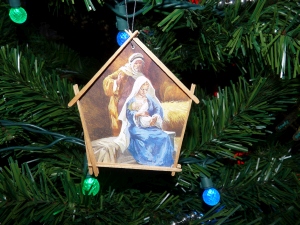 The Bible doesn't give a date for the "birth" of Jesus. Some claim it was in the Spring or Fall because shepherds were in the fields, but this is a misunderstanding of the Jewish winters that actually had shepherds in the fields around Jerusalem in the winter because winters in Israel are mild with light snow in the mountains.
So, in the Spring and Fall, the shepherds were actually up in the mountains with their sheep instead of the fields around Jerusalem, so Jesus could not have been born in those seasons. There are other indications that Jesus was born in winter. You can learn more at the following links:
WHAT JEHOVAH’S WITNESSES NEED TO KNOW ABOUT CHRISTMAS (4Jehovah.org)
IS CHRISTMAS PAGAN OR CHRISTIAN?—12 Questions for Jehovah’s Witnesses Challenging Common Objections Against the Christmas Holiday (4Jehovah.org)
Read more
When Did Jesus Become the Christ?
Jehovah's Witnesses claim that it was at Jesus' baptism when the Holy Spirit came down as a dove that Jesus became the "Christ" (See the Watchtower's book, Holy Spirit--The force behind the coming new order, 1975, p. 90). But this belief is inconsistent with the Biblical testimony that says that Jesus was proclaimed the "Christ" at His birth! See these verses below:
Read more
What Is Jesus Doing Now?
JEHOVAH'S WITNESS QUESTION: "What is Jesus doing now?"
Some Jehovah's Witnesses ask this question in an attempt to prove their end-time chronology. Yet, Jehovah's Witnesses completely misinterpret Daniel's vision of the Tree at Daniel 4:10-16 for a prophetic set of years from 607 B.C. to 1914 C.E.
Read more
Why Do Jehovah’s Witness Kingdom Halls Not Have Windows?

WHY DO JEHOVAH’S WITNESS KINGDOM HALLS NOT HAVE WINDOWS?
"As I’ve been driving across the United States, I’ve noticed a bunch of Kingdom Halls of Jehovah’s Witnesses that do not have windows. Most of the Christian churches have windows. So, why don’t Jehovah’s Witnesses have them? Is it to keep their people from looking out the windows while they are trying to brainwash them? Is it to keep others from looking in and observing their meetings?"
Read more

Are the Wicked Tormented after Death? - Matthew 25:46

AT DEATH DO THE WICKED GO TO ‘ETERNAL PUNISHMENT’ OR ‘EVERLASTING CUTTING-OFF’? Does Matthew 25:46 support the Watchtower’s view of annihilation?
MATTHEW 25:46
Read more

Are Human Souls Unconscious after Death? - Ecclesiastes 9:5
Ecclesiastes 9:5: “The dead do not know anything … for their memory is forgotten.” Are human souls unconscious after death?
ECCLESIASTES 9:5-6: “For the living know they will die; but the dead do not know anything, nor have they any longer a reward, for their memory is forgotten. Also their love, and their hatred, and their envy, is now perished; neither have they any more a portion for ever in any thing that is done under the sun.” 1.
Read more

Is Water Baptism Essential for Salvation?

IS WATER BAPTISM ESSENTIAL FOR SALVATION?
Some religious groups that claim to be Christian, including Mormons and Jehovah’s Witnesses, teach that in addition to professing faith in Jesus Christ, one must also be physically baptized for salvation.
This belief, also called “baptismal regeneration,” forms the basis for a works plus faith doctrine that requires physical water baptism to be performed upon a new convert by authorized personnel within the religious institution before members consider the convert “saved.” There are several problems with this belief. First of all, when Scripture expounds on the salvation process, rarely is physical water baptism even mentioned. Instead, emphasis is given to faith (belief/trust) in Jesus Christ’s death, burial and resurrection and repentance (confessing and turning away from sin) to make Jesus Christ Lord and Savior. Secondly, as the following Scriptures explain, salvation is said to be “by faith” alone, apart from the works of human righteousness. Notice that baptism is not even mentioned in any of these verses:
Read more
Why Mormons and Jehovah's Witnesses Are Not Christians


WHY THEY ARE NOT CHRISTIANS - Answering the Question: "Why do you say that Mormons and Jehovah's Witnesses are not Christians. Don't they believe in Jesus?"
The Mormon religion (officially known as the Church of Jesus Christ of Latter-day Saints or LDS) and the Jehovah’s Witness organization (also known as the Watchtower) both share a common foundational doctrine: They claim that Christianity became corrupt at the death of the New Testament apostles. They assert that through their religion alone, God has restored the lost and corrupted elements of the Christian faith so that only those who practice their religion possess the purest form of Christianity.
Read more


